


The dominant model, built on chasing algorithms, hunting for fleeting virality, and producing highly scripted content at scale, no longer meets the expectations of an overwhelmed audience. In 2026, we’re witnessing a radical shift: human connection, trust, and authenticity are overtaking raw performance.
For Marketing Directors and Communications Leaders, this isn’t just another evolution in usage, it’s a breaking point. At a time when technology must fade behind emotion and meaningful information, brands face a critical question:
How do you continue to exist without becoming just another digital intrusion?
Audiences Are Rejecting Synthetic Perfection
We’re living in a technological paradox.
While generative AI enables massive, automated content production, it has also flooded platforms with “perfect” yet emotionally empty content, content users are now instinctively rejecting.
This is no longer a niche trend. It’s a clear warning signal for the entire industry.
A Trust Crisis Amplified by Generative AI
In the first half of 2025, calls for boycotts surged by 95%, highlighting an unprecedented trust crisis toward brands perceived as artificial.
Consumers no longer want to be subjected to top-down advertising.
They seek human resonance and experiences they actively choose, not ones imposed on them.
From Raw Performance to a “Pull” Strategy
To stay relevant in 2026, your marketing must trade reach for credibility and emotional impact.
This is what we call a “Pull” strategy, where your brand becomes a cultural asset, not a disruption.
In our Trendbook 2026, we outline the exact methodology to structure narratives that earn audience trust in an AI-saturated environment.
The Urgent Need to Embody Your Brand in the Real World
Digital alone is no longer enough to leave a lasting impression.
In response to total dematerialization, brands must now step outside the screen and take physical form. We’re seeing a hybrid model emerge, where social media no longer just broadcasts events but becomes their emotional amplifier.
The example of the GP Explorer 3 is a case in point.
By bringing together 200,000 attendees in person while engaging millions of viewers on Twitch and public broadcast, the event proved that a physical experience can become a global resonance engine.
From Ad Exposure to Collective Experience
For the 47 advertisers present, the challenge was to move beyond fleeting impressions and create deep, immersive experiences within a shared moment.
This search for authenticity is also benefiting platforms positioning themselves as “augmented reality,” encouraging creators to launch physical products and real-world challenges.
Your Content Strategy Must Now Win the Living Room
The smartphone is no longer the sole gateway to social media.
Social content is moving into the living room through Connected TV. This shift toward a lean-back experience, comfortable, passive, and on a big screen, fundamentally changes how brands must produce content.
The Rise of Social Television
The era of amateurism is over.
We’re seeing massive professionalization among creators, who are now adopting blockbuster-level production standards. YouTube has reached a major tipping point: over 50% of its audience now watches content on TV screens.
Why Long-Form and Premium Content Are Now Essential
The convergence between social media and streaming is accelerating, with video podcasts being integrated into platforms like Netflix starting in 2026.
If your brand still relies solely on short (viral snippets, without a vision for long-form, high-production content) you risk disappearing from your audience’s primary screens.
The Strategic Retreat into Protected Digital Gardens
This may be the most complex challenge for traditional brands used to mass broadcasting.
In a world saturated by “TikTok-style” feeds, audiences are leaving public platforms to retreat into semi-private digital spaces.
The Rise of Closed Micro-Communities
Platforms like Reddit, Discord, and WhatsApp are becoming the new sanctuaries for intimate conversations.
Here, unilateral mass marketing isn’t just ineffective, it’s often outright rejected.
From Broadcaster to Facilitator
The 2026 consumer isn’t looking for ads, they’re looking for human-centered conversations.
For brands, the challenge is to exist within these micro-communities without being intrusive, by becoming facilitators of dialogue rather than message broadcasters.
This requires a mindset shift: stop treating interactions as cold data, and start recognizing the real emotions behind them.
Anticipate, Don’t Suffer 2026 Saturation
As the ecosystem becomes saturated with artificial narratives, authenticity becomes the only sustainable differentiator.
In 2026, brands can no longer define themselves by their ability to capture attention at any cost.
Their role lies elsewhere: in their ability to be useful, credible, and aligned with their purpose.
This is how brands become lasting reference points, trusted spaces where meaning and connection are rebuilt.
At Biggie, we turn these structural challenges into concrete opportunities.
Our expertise in SEO, digital marketing, AI, and data allows us to decode weak signals and help you stay ahead.
We don’t just observe trends, we transform them into strategic growth levers.
The 2026 social landscape offers unprecedented opportunities for those ready to reinvent human connection.
FAQ – Social Media and Brand Strategy in 2026
Why is traditional social media becoming a risk for brands in 2026?
Traditional social media still relies heavily on artificial virality, algorithmic over-optimization, and standardized content. In 2026, these practices generate distrust and fatigue. Audiences now favor brands that are authentic, useful, and credible—brands that create relationships people choose, rather than endure.
How can brands rebuild trust with their audiences?
Trust is rebuilt by reintroducing humanity, reality, and emotion into content strategies. This means creating tangible experiences, telling sincere stories, and maintaining a respectful presence in conversational spaces. Brands must evolve into cultural reference points—not just message distributors.
What is the role of social media in brand strategy by 2026?
Social media is no longer just a visibility lever. It becomes a tool for building connection, long-term engagement, and cultural value. When integrated into a broader strategy combining digital, data, and real-world experiences, it strengthens a brand’s relevance and legitimacy in a saturated ecosystem.
Download our Trendbook
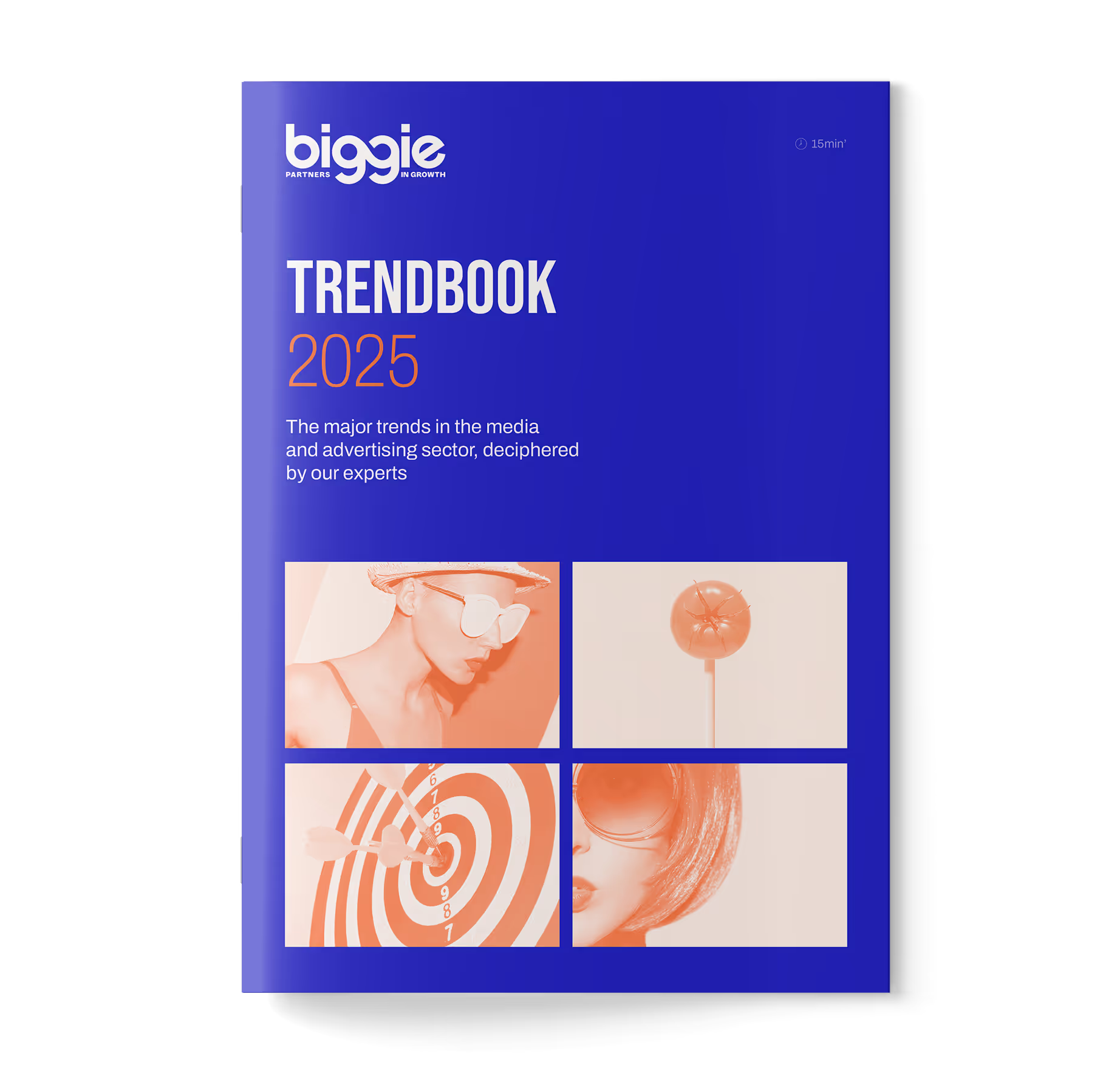
Our TrendBook, the fruit of the hybridization of the agency's know-how, reveals the four major trends in the media and advertising sector, deciphered by our experts:
- How to capture consumers in the age of the Messy Funnel;
- Why AI is emerging as a cultural revolution;
- How television is becoming plural;
- Why influencer marketing has reached the age of maturity.


