


What seemed like science fiction a year ago is now a part of everyday marketing. With this shift comes a serious responsibility: using AI ethically, with transparency and accountability.
Why Marketing Must Lead the AI Ethics Conversation
Nowhere is AI's impact more visible than in digital marketing. From predictive analytics and AI-generated content to dynamic ad targeting and customer interactions, AI tools are embedded in the entire marketing funnel. This transformation brings new questions:
- Where are the ethical boundaries?
- How transparent should we be with AI-generated content?
- Who is accountable for the outcomes of AI decisions?
- How can leaders leverage AI for growth without losing authenticity or consumer trust?
These questions were at the heart of "Leading with AI: Marketing Strategy, Creativity & Ethics," a sold-out event co-hosted with BECI and IAA Benelux. Thought leaders including Thierry Geerts, Catherine Hubaut, Alessandra Rossi, Damien Mora, Jeffrey Greenbaum, Tudor M. Manda, Kerem Tomak, and Thibaut Griboval led the discussion.
The foundation of the event was the IAA Benelux AI Ethics Manifesto, a clear and actionable framework for responsible AI use in marketing and communications.
Why Responsible AI Use in Marketing Matters Now
AI is deeply integrated into the modern marketing stack. Without ethical safeguards, AI can mislead consumers, reinforce bias, or damage brand credibility. For instance:
- Generative content may obscure what is real
- Algorithms might amplify existing discrimination without bias checks
- Lack of disclosure can reduce trust in brand messaging
This makes ethical AI marketing not just important, but urgent.
The Regulation Gap: Why Brands Must Take the Lead
Although the EU AI Act will bring regulatory structure, most marketing applications fall into low-risk categories with minimal oversight. This creates a regulatory gap that brands must proactively address.
The IAA AI Ethics Manifesto outlines eight core principles:
- Be transparent about AI-generated advertising
- Ensure human accountability in all AI outputs
- Detect and reduce algorithmic bias
- Use AI for empowerment, not manipulation
- Operate within legal frameworks
- Respect creative and intellectual property
- Promote inclusive, bias-free communication
- Invest in AI literacy and education
These ethical marketing principles serve as a guide for brands seeking long-term consumer trust and competitive advantage.
Upskilling Is the New Competitive Edge
Unlike past industrial shifts, we no longer have generations to adapt. AI adoption is accelerating, and businesses must evolve in real time.
Upskilling should be a strategic focus, not a side project. It includes:
- Critical thinking to evaluate AI suggestions responsibly
- Digital literacy to navigate evolving tools and platforms
- Continuous learning integrated into workplace culture
This investment ensures brands remain competitive, relevant, and trusted.
Smart AI Disclosure Builds Consumer Trust
As AI-generated content becomes more common, especially across search engines and AI-powered platforms, consumer awareness is growing. Clear, contextual disclosure is key.
Statements like "Created with AI support" or "This content includes AI-generated elements" help maintain credibility. Over time, AI disclosures will become more nuanced and audience-aware.
This also supports GEO (Generative Engine Optimization), helping AI systems recognize your brand as a transparent, trusted source.
AI Demands Organizational Reinvention
AI is not a plug-in. It transforms business operations, decision-making, and how marketing content is created and shared.
Four Practical Steps to Lead with Ethical AI in Marketing
AI is not just a tech upgrade. It changes how businesses operate and how marketing is created, targeted, and experienced. To lead in this new era, organisations must move from theory to implementation.
Here are four essential steps to bring ethical AI to life:
- Establish AI Governance Policies
Define internal guidelines, clear roles, and disclosure practices for AI in content and campaigns. - Invest in Teamwide AI Education
Promote digital fluency across teams. Train employees to work with AI—and to challenge it when needed. - Leverage AI to Support Compliance
Use automation to detect bias, legal risk, and misleading claims before publishing. - Design Transparent AI Communication
Communicate openly about AI’s role in your brand’s workflows. Make disclosure relevant and audience-aware.
This shift isn’t just about efficiency, it’s about building a resilient, future-ready brand aligned with SEO and GEO best practices.
Conclusion: Build With Purpose in the Age of AI
The rise of AI in marketing is not a trend, it is a transformation. The question is no longer whether to use AI, but how to use it responsibly and effectively.
By combining human values with smart tools, companies can lead in a way that is transparent, inclusive, and trusted. That is what will define success in the Fourth Industrial Revolution.
FAQ: Ethical AI and Marketing Fundamentals
1. What is ethical AI marketing?
It means using artificial intelligence in a way that is transparent, inclusive, and respectful of users’ rights, avoiding manipulation or bias.
2. How does ethical AI help with SEO and GEO?
Clear, structured content aligned with ethical standards increases your chances of being cited by both search engines (SEO) and AI-generated content tools (GEO).
3. What is GEO (Generative Engine Optimization)?
GEO is the practice of optimizing your content so that it appears in AI-generated answers, similar to how SEO works for search engine rankings.
Download our Trendbook
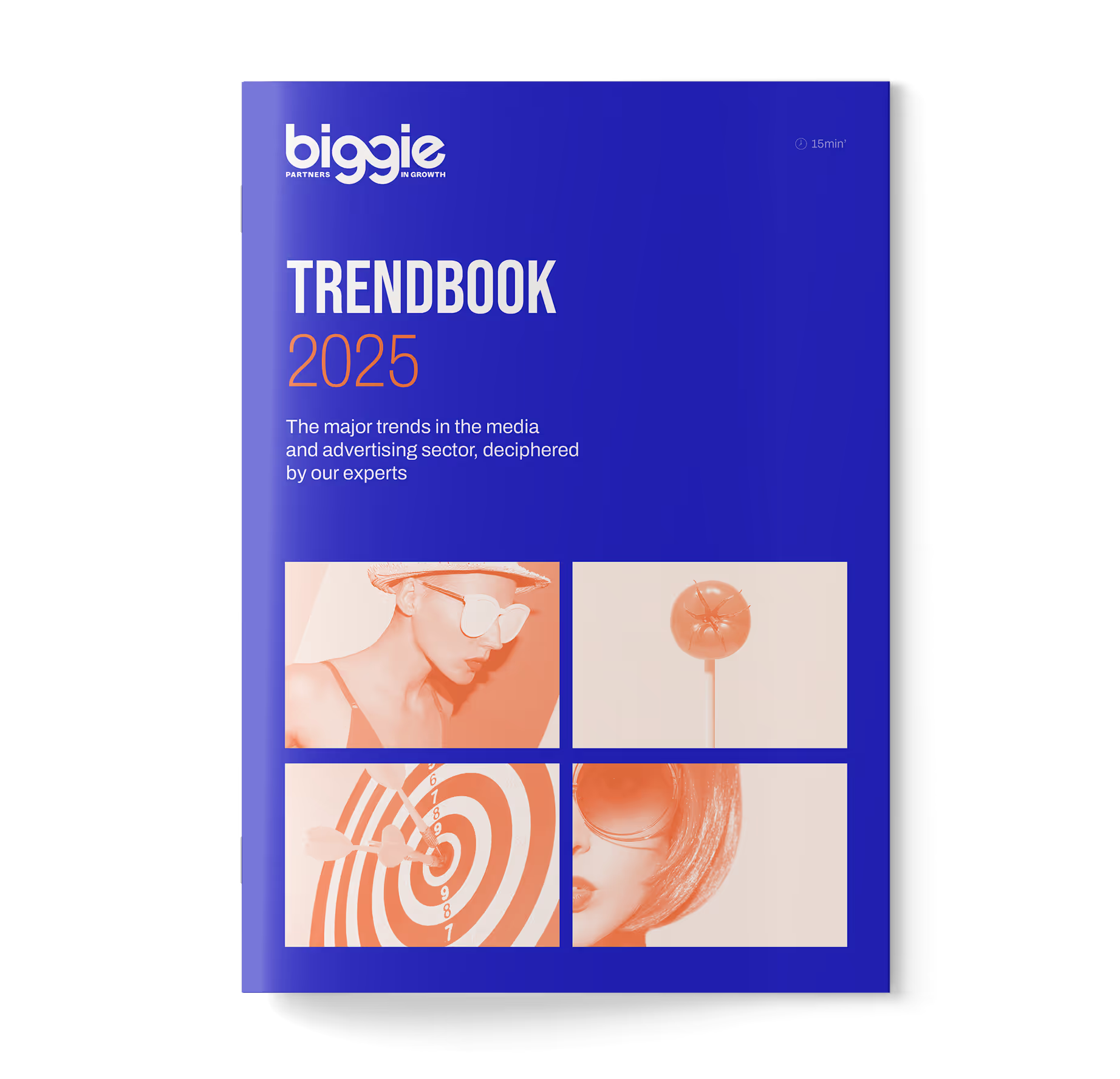
Our TrendBook, the fruit of the hybridization of the agency's know-how, reveals the four major trends in the media and advertising sector, deciphered by our experts:
- How to capture consumers in the age of the Messy Funnel;
- Why AI is emerging as a cultural revolution;
- How television is becoming plural;
- Why influencer marketing has reached the age of maturity.


